Speckle interferometry has been on RFO’s research radar for a while, with earlier proof-of-concept observations demonstrating the technique is achievable with the RC20 telescope. This summer, RFO volunteer Harley Zerega took that foundation to the next level, systematically working to understand the limits of what the RC20 can accomplish with speckle — observing three double …
Progress on Exoplanet Transit of Wasp 194-b
I wanted to share a progress update on the analysis for an exoplanet transit of WASP-194 b that was observed recently by Ryan McDaniel on May 26, 2026 at RFO. I contacted AAVSO to obtain a comparison star sequence for the host star, WASP-194, and they followed up and let me know the sequence was ready.
RFO Volunteers Publish New Measurements of a 194-Year-Old Double Star Discovery
Two RFO volunteers, Sophie Qin and Rachel Freed, have submitted a research paper to the Journal of Double Star Observations (JDSO) presenting new astrometric measurements of the double star system WDS 18428+5938 ” a pair of stars that have been watched by astronomers for nearly two centuries. A Star System with a Long History WDS …
High School Students Catch a Star System Speeding Up — And Submit the Proof to a Scientific Journal
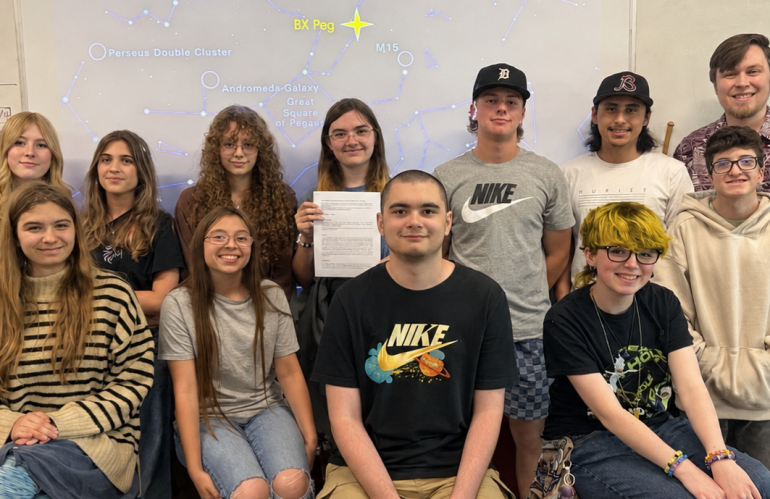
One of the most rewarding aspects of the RFO Research Program is seeing students do genuine science ” not simulations or textbook exercises, but original research that contributes to the broader astronomical community. This week, that became especially real: a group of students and their teacher at Buckingham Collegiate Charter Academy in Vacaville submitted a …
Annual Research Report 2025: A Transformed Research Program — Automation, Spectroscopy, and Record Science Output
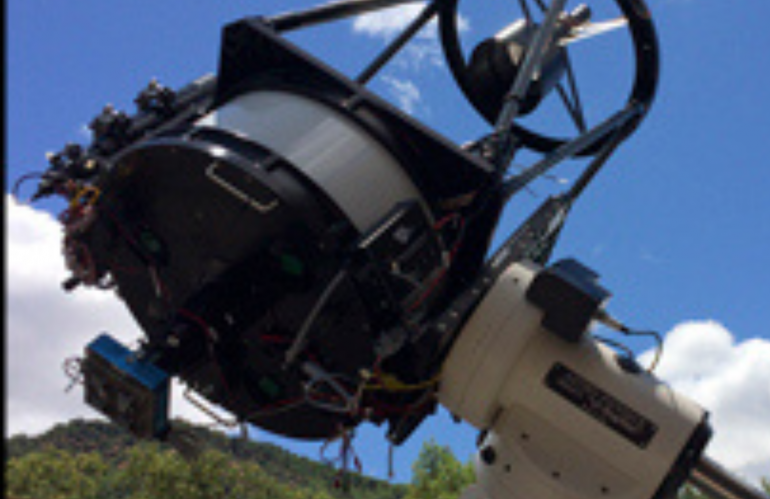
The year 2025 marked a turning point for RFO’s research program. The Research Committee transformed the RC20 telescope from a capable but manually operated instrument into a fully automated research platform, expanded into two new scientific disciplines, and established formal structures that have made the program more productive, more accessible, and more capable of producing …
Annual Research Report 2024: First Exoplanet Transits, New Cameras, and a Variable Star in Decline
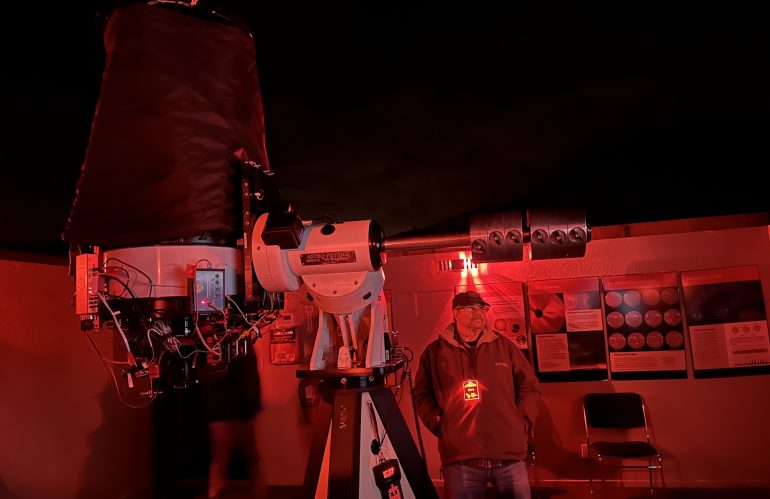
2024 was a year of firsts and dramatic moments for the RFO Research Committee. Theteam quadrupled its image output over 2023, capturing more than 3,000 science imagesacross 78 observing nights. New cameras went into service on the RC20, exoplanettransits were successfully observed for the first time, and in September a closely watchedvariable star began one …
Citizen Scientists Confirm the Infrared Signature of Rare R Coronae Borealis Stars
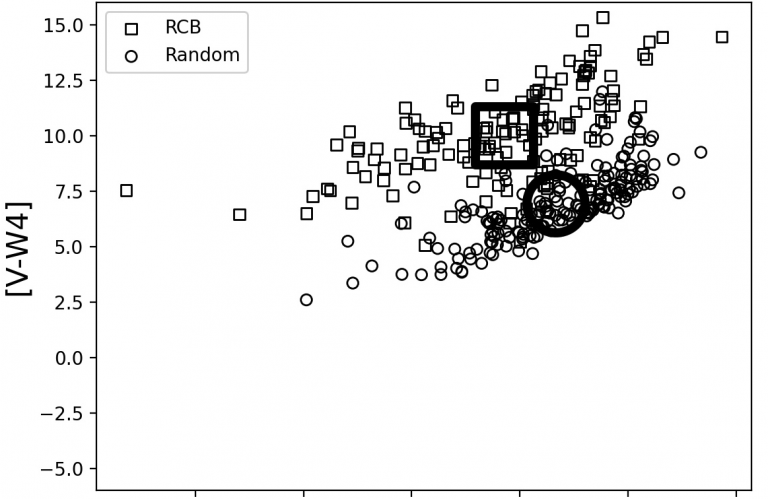
R Coronae Borealis (RCB) stars are among the rarest objects in the sky. These hydrogen-deficient supergiant stars ” fewer than 150 have been confirmed in our entire galaxy ” experience dramatic and unpredictable brightness drops, sometimes fading by seven or eight magnitudes over just a few weeks. The cause is striking: clouds of carbon dust …
High School Students Publish Research on Double Star System WDS 22267+4433
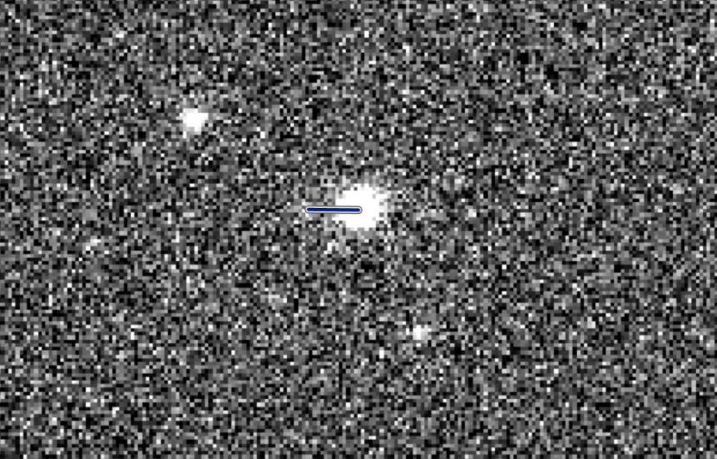
Can two stars be gravitationally bound to each other across the void of space? Determining whether a pair of stars that appear close together in the sky are actually in orbit around each other ” or merely close in our line of sight by coincidence ” requires measuring their positions precisely, repeatedly, over many years. …
Watching a World Cross Its Star: RFO’s First Exoplanet Transit Campaigns
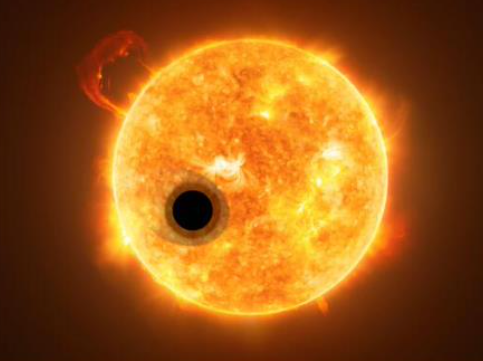
One of the most powerful methods for detecting planets around other stars is also one of the most elegantly simple: when a planet passes directly in front of its host star from our perspective, the star dims very slightly ” typically by less than one percent ” for a predictable period of time. The dimming …
Annual Research Report 2023: Laying the Groundwork for Citizen Science at RFO
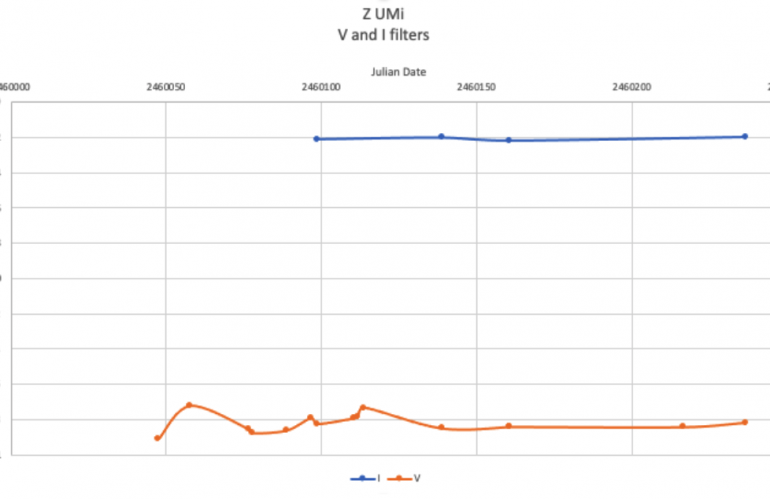
The RFO Research Committee was founded in the spring of 2021. By 2023, it had grown into a functioning research organization with regular observing sessions, active software development, new instrumentation, student research partnerships, and an in-progress publication. This report summarizes the work of the committee across 2023 ” a year of building foundations. Observations and …